


Page 79 - Demo
P. 79
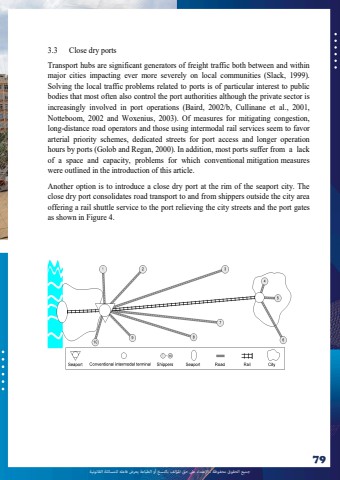
%u062c%u0645%u064a%u0639 %u0627%u0644%u062d%u0642%u0648%u0642 %u0645%u062d%u0641%u0648%u0638%u0629 %u0640 %u0627%u0625%u0644%u0639%u062a%u062f%u0627%u0621 %u0639%u0649%u0644 %u062d%u0642 %u0627%u0645%u0644%u0624%u0644%u0641 %u0628%u0627%u0644%u0646%u0633%u062e %u0623%u0648 %u0627%u0644%u0637%u0628%u0627%u0639%u0629 %u064a%u0639%u0631%u0636 %u0641%u0627%u0639%u0644%u0647 %u0644%u0644%u0645%u0633%u0627%u0626%u0644%u0629 %u0627%u0644%u0642%u0627%u0646%u0648%u0646%u064a%u062979- 79 -3.3 Close dry portsTransport hubs are significant generators of freight traffic both between and within major cities impacting ever more severely on local communities (Slack, 1999). Solving the local traffic problems related to ports is of particular interest to public bodies that most often also control the port authorities although the private sector is increasingly involved in port operations (Baird, 2002/b, Cullinane et al., 2001, Notteboom, 2002 and Woxenius, 2003). Of measures for mitigating congestion, long-distance road operators and those using intermodal rail services seem to favor arterial priority schemes, dedicated streets for port access and longer operation hours by ports (Golob and Regan, 2000). In addition, most ports suffer from a lack of a space and capacity, problems for which conventional mitigation measures were outlined in the introduction of this article.Another option is to introduce a close dry port at the rim of the seaport city. The close dry port consolidates road transport to and from shippers outside the city area offering a rail shuttle service to the port relieving the city streets and the port gates as shown in Figure 4.


