


Page 82 - Demo
P. 82
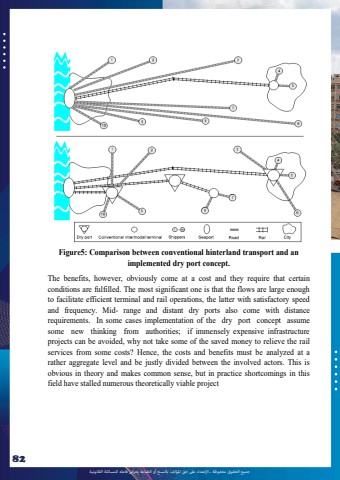
%u062c%u0645%u064a%u0639 %u0627%u0644%u062d%u0642%u0648%u0642 %u0645%u062d%u0641%u0648%u0638%u0629 %u0640 %u0627%u0625%u0644%u0639%u062a%u062f%u0627%u0621 %u0639%u0649%u0644 %u062d%u0642 %u0627%u0645%u0644%u0624%u0644%u0641 %u0628%u0627%u0644%u0646%u0633%u062e %u0623%u0648 %u0627%u0644%u0637%u0628%u0627%u0639%u0629 %u064a%u0639%u0631%u0636 %u0641%u0627%u0639%u0644%u0647 %u0644%u0644%u0645%u0633%u0627%u0626%u0644%u0629 %u0627%u0644%u0642%u0627%u0646%u0648%u0646%u064a%u062982- 82 -Figure5: Comparison between conventional hinterland transport and an implemented dry port concept.The benefits, however, obviously come at a cost and they require that certain conditions are fulfilled. The most significant one is that the flows are large enough to facilitate efficient terminal and rail operations, the latter with satisfactory speed and frequency. Mid- range and distant dry ports also come with distance requirements. In some cases implementation of the dry port concept assume some new thinking from authorities; if immensely expensive infrastructure projects can be avoided, why not take some of the saved money to relieve the rail services from some costs? Hence, the costs and benefits must be analyzed at a rather aggregate level and be justly divided between the involved actors. This is obvious in theory and makes common sense, but in practice shortcomings in this field have stalled numerous theoretically viable project


