


Page 117 - Demo
P. 117
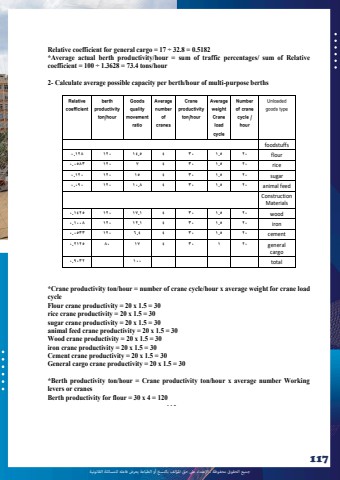
%u062c%u0645%u064a%u0639 %u0627%u0644%u062d%u0642%u0648%u0642 %u0645%u062d%u0641%u0648%u0638%u0629 %u0640 %u0627%u0625%u0644%u0639%u062a%u062f%u0627%u0621 %u0639%u0649%u0644 %u062d%u0642 %u0627%u0645%u0644%u0624%u0644%u0641 %u0628%u0627%u0644%u0646%u0633%u062e %u0623%u0648 %u0627%u0644%u0637%u0628%u0627%u0639%u0629 %u064a%u0639%u0631%u0636 %u0641%u0627%u0639%u0644%u0647 %u0644%u0644%u0645%u0633%u0627%u0626%u0644%u0629 %u0627%u0644%u0642%u0627%u0646%u0648%u0646%u064a%u0629117- 115-Relative coefficient for general cargo = 17 %u00f7 32.8 = 0.5182*Average actual berth productivity/hour = sum of traffic percentages/ sum of Relative coefficient = 100 %u00f7 1.3628 = 73.4 tons/hour 2- Calculate average possible capacity per berth/hour of multi-purpose berthsUnloaded goods typeNumber of cranecycle / hourAverage weight Crane load cycleCrane productivity ton/hourAverage number of cranesGoods quality movement ratioberth productivity ton/hourRelative coefficientfoodstuffs flour rice sugar animal feedConstruction Materials wood iron cementgeneral cargo total*Crane productivity ton/hour = number of crane cycle/hour x average weight for crane load cycleFlour crane productivity = 20 x 1.5 = 30rice crane productivity = 20 x 1.5 = 30sugar crane productivity = 20 x 1.5 = 30animal feed crane productivity = 20 x 1.5 = 30Wood crane productivity = 20 x 1.5 = 30iron crane productivity = 20 x 1.5 = 30Cement crane productivity = 20 x 1.5 = 30General cargo crane productivity = 20 x 1.5 = 30*Berth productivity ton/hour = Crane productivity ton/hour x average number Working levers or cranesBerth productivity for flour = 30 x 4 = 120


