


Page 93 - Demo
P. 93
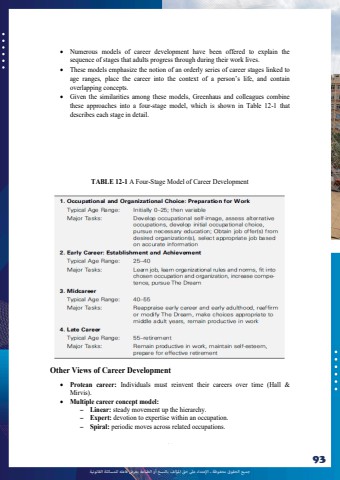
%u062c%u0645%u064a%u0639 %u0627%u0644%u062d%u0642%u0648%u0642 %u0645%u062d%u0641%u0648%u0638%u0629 %u0640 %u0627%u0625%u0644%u0639%u062a%u062f%u0627%u0621 %u0639%u0649%u0644 %u062d%u0642 %u0627%u0645%u0644%u0624%u0644%u0641 %u0628%u0627%u0644%u0646%u0633%u062e %u0623%u0648 %u0627%u0644%u0637%u0628%u0627%u0639%u0629 %u064a%u0639%u0631%u0636 %u0641%u0627%u0639%u0644%u0647 %u0644%u0644%u0645%u0633%u0627%u0626%u0644%u0629 %u0627%u0644%u0642%u0627%u0646%u0648%u0646%u064a%u062993Electronic Resources %u2013 Human Resources Development Year Four - 2021 | |91%u2022 Numerous models of career development have been offered to explain the sequence of stages that adults progress through during their work lives. %u2022 These models emphasize the notion of an orderly series of career stages linked to age ranges, place the career into the context of a person%u2019s life, and contain overlapping concepts. %u2022 Given the similarities among these models, Greenhaus and colleagues combine these approaches into a four-stage model, which is shown in Table 12-1 that describes each stage in detail. TABLE 12-1 A Four-Stage Model of Career DevelopmentOther Views of Career Development%u2022 Protean career: Individuals must reinvent their careers over time (Hall & Mirvis).%u2022 Multiple career concept model:%u2013 Linear: steady movement up the hierarchy.%u2013 Expert: devotion to expertise within an occupation.%u2013 Spiral: periodic moves across related occupations.


