


Page 95 - Demo
P. 95
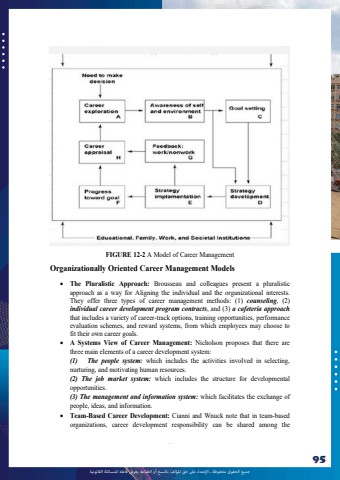
%u062c%u0645%u064a%u0639 %u0627%u0644%u062d%u0642%u0648%u0642 %u0645%u062d%u0641%u0648%u0638%u0629 %u0640 %u0627%u0625%u0644%u0639%u062a%u062f%u0627%u0621 %u0639%u0649%u0644 %u062d%u0642 %u0627%u0645%u0644%u0624%u0644%u0641 %u0628%u0627%u0644%u0646%u0633%u062e %u0623%u0648 %u0627%u0644%u0637%u0628%u0627%u0639%u0629 %u064a%u0639%u0631%u0636 %u0641%u0627%u0639%u0644%u0647 %u0644%u0644%u0645%u0633%u0627%u0626%u0644%u0629 %u0627%u0644%u0642%u0627%u0646%u0648%u0646%u064a%u062995Electronic Resources %u2013 Human Resources Development Year Four - 2021 | |93FIGURE 12-2 A Model of Career ManagementOrganizationally Oriented Career Management Models%u2022 The Pluralistic Approach: Brousseau and colleagues present a pluralistic approach as a way for Aligning the individual and the organizational interests. They offer three types of career management methods: (1) counseling, (2) individual career development program contracts, and (3) a cafeteria approachthat includes a variety of career-track options, training opportunities, performance evaluation schemes, and reward systems, from which employees may choose to fit their own career goals.%u2022 A Systems View of Career Management: Nicholson proposes that there are three main elements of a career development system: (1) The people system: which includes the activities involved in selecting, nurturing, and motivating human resources.(2) The job market system: which includes the structure for developmental opportunities. (3) The management and information system: which facilitates the exchange of people, ideas, and information.%u2022 Team-Based Career Development: Cianni and Wnuck note that in team-based organizations, career development responsibility can be shared among the


