


Page 27 - Demo
P. 27
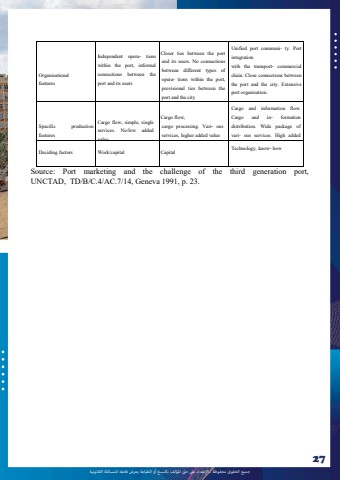
%u062c%u0645%u064a%u0639 %u0627%u0644%u062d%u0642%u0648%u0642 %u0645%u062d%u0641%u0648%u0638%u0629 %u0640 %u0627%u0625%u0644%u0639%u062a%u062f%u0627%u0621 %u0639%u0649%u0644 %u062d%u0642 %u0627%u0645%u0644%u0624%u0644%u0641 %u0628%u0627%u0644%u0646%u0633%u062e %u0623%u0648 %u0627%u0644%u0637%u0628%u0627%u0639%u0629 %u064a%u0639%u0631%u0636 %u0641%u0627%u0639%u0644%u0647 %u0644%u0644%u0645%u0633%u0627%u0626%u0644%u0629 %u0627%u0644%u0642%u0627%u0646%u0648%u0646%u064a%u062927Organisational featuresIndependent opera- tionswithin the port, informalconnections between theport and its usersCloser ties between the portand its users. No connectionsbetween different types ofopera- tions within the port, provisional ties between theport and the cityUnified port communi- ty. Portintegrationwith the transport- commercialchain. Close connections betweenthe port and the city. Extensiveport organisation.Specific production featuresCargo flow, simple, singleservices. No/low addedvalueCargo flow,cargo processing. Vari- ousservices, higher added valueCargo and information flow.Cargo and in- formationdistribution. Wide package ofvari- ous services. High addedvalueDeciding factors Work/capital CapitalTechnology, know- howSource: Port marketing and the challenge of the third generation port, UNCTAD, TD/B/C.4/AC.7/14, Geneva 1991, p. 23.


