


Page 29 - Demo
P. 29
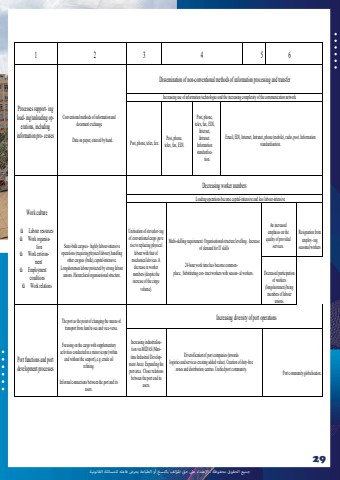
%u062c%u0645%u064a%u0639 %u0627%u0644%u062d%u0642%u0648%u0642 %u0645%u062d%u0641%u0648%u0638%u0629 %u0640 %u0627%u0625%u0644%u0639%u062a%u062f%u0627%u0621 %u0639%u0649%u0644 %u062d%u0642 %u0627%u0645%u0644%u0624%u0644%u0641 %u0628%u0627%u0644%u0646%u0633%u062e %u0623%u0648 %u0627%u0644%u0637%u0628%u0627%u0639%u0629 %u064a%u0639%u0631%u0636 %u0641%u0627%u0639%u0644%u0647 %u0644%u0644%u0645%u0633%u0627%u0626%u0644%u0629 %u0627%u0644%u0642%u0627%u0646%u0648%u0646%u064a%u0629291 2 3 4 5 6Processes support- ingload- ing/unloading operations, including information pro- cessesConventionalmethods of information anddocument exchangeData on paper, entered by hand.Dissemination of non-conventional methods of information processing and transferIncreasing use of information technologies and the increasing complexity of the communication networkPost, phone, telex, fax. Post, phone,telex, fax, EDI.Post, phone,telex, fax, EDI,Internet,Intranet. Informationstandardisation.Email, EDI, Internet, Intranet, phone (mobile), radio, post. Information standardisation.Work culture%u00fc Labour resources%u00fc Work organisation%u00fc Work environment%u00fc Employment conditions%u00fc Work relationsSemi-bulk cargoes - highly labour-intensiveoperations (requiring physical labour), handlingother cargoes (bulk), capital-intensive.Longshoremen labour protected by strong labourunions. Hierarchical organisational structure.Decreasing worker numbersLoading operations become capital-intensive and less labour-intensiveUnitisation of stevedor- ingof conventional cargo gaverise to replacing physicallabour with that ofmechanical devices. A decrease in worker numbers (despite the increase of the cargo volume).Multi-skilling requirement. Organisationalstructure levelling. Increaseof demand for IT skills24-hour work time has become commonplace. Substituting con- tract workers with season- al workers.An increasedemphasis on thequality of provided services.Resignation fromemploy- ingseasonal workersDecreased participationof workers(longshoremen) being members of labourunions.Port functions and portdevelopment processesThe port as the point of changing the means oftransport from land to sea and vice-versa.Focusing on the cargo with supplementaryactivities conducted in a minorscope (withinand without the seaport), e.g. crude oilrefining.Informal connections between the port and itsusers.Increasing diversity of port operationsIncreasing industrialisation via MIDAS (Maritime Industrial Development Area). Expanding theport area. Closer relationsbetween the port and itsusers.Diversification of port companies(towardslogistics and services creating added value). Creation of duty-free zones and distribution centres. Unified port community. Port community globalisation.


